Imagine walking into a warm kitchen on a crisp autumn morning where the air is thick with the sweet scent of cinnamon and freshly baked bread waiting on the counter. This carrot cake sourdough loaf is a beautiful marriage between two world class baked goods that you would normally never see sharing the exact same space in a bakery window. It takes the deeply satisfying rustic crunch and wild tang of a traditional sourdough bread and infuses it with the cozy comforting flavors of a classic homemade carrot cake. We are talking about sweet grated carrots running through the dough like little golden threads along with warm spices that wake up your senses and make your kitchen feel like the safest place on earth. Most people think sourdough has to be plain and savory but this recipe shatters that old idea by introducing a touch of natural sweetness that works in perfect harmony with the fermentation. By bringing these two concepts together you get a loaf of bread that is incredibly versatile and unlike anything you have ever purchased from a commercial grocery store down the road. It is a slow food project that rewards your patience with a stunning center piece for your dining room table that will have everyone begging for a thick slice.
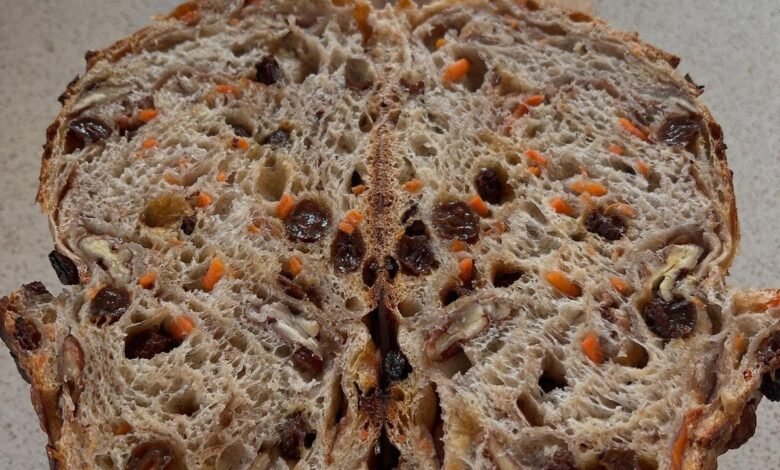
People absolutely adore this recipe because it gives them the best of both worlds without being overwhelmingly sugary or heavy like a standard cake frosted with thick layers of cream cheese. There is something deeply satisfying about slicing into a beautiful dark crust only to reveal a soft pillowy interior that is studded with colorful flecks of orange and tiny pockets of aromatic spice. Kids love it because it feels like a sneaky way to eat cake for breakfast while parents feel great about it because it relies on the natural power of wild yeast rather than commercial additives or chemical risers. Many home bakers who have grown a bit bored of making the same standard white loaf week after week find this recipe to be the perfect creative spark to renew their passion for the craft of baking. It is also a massive hit at brunch gatherings where people are tired of the usual pastries and want something that feels deeply rustic yet surprisingly elegant at the exact same moment. The texture is a true marvel because the moisture from the grated carrots keeps the crumb incredibly soft and tender for days after it comes out of the hot oven.
The absolute best time to start making this carrot cake sourdough loaf is on a lazy Friday afternoon when you have a bit of time to tend to your dough between your other household activities. It is a wonderful weekend project that allows you to slow down and enjoy the natural rhythms of fermentation which can be an incredibly peaceful escape from a stressful work week. You should make this when you want to surprise your family with a special weekend breakfast that pairs beautifully with a hot cup of coffee or a warm mug of spiced chai tea. It is also a fantastic choice for the holiday season when you want to bring something unique to a potluck or give a handmade gift that shows how much you truly care about the person receiving it. From a wellness perspective this loaf is a great option for people who love the taste of spiced desserts but want a cleaner option that supports good digestion through the natural process of long fermentation. There is an emotional magic to watching a simple mixture of flour and water rise up into a magnificent loaf that feeds the people you love most in this world.
When you take that very first bite you will notice how the subtle sour notes of the dough contrast beautifully with the warm heat of the ginger and the deep sweetness of the carrots. It creates a complex flavor experience that keeps you coming back for another bite because it is neither too sweet nor too plain but sits right in that perfect sweet spot of culinary balance. You might find yourself slicing off a piece just to toast it up and spread a generous layer of salted butter or honeyed cream cheese over the top while it is still warm enough to melt the spread. Embracing the art of sourdough baking is all about connecting with ancient traditions and learning to trust your senses as you feel the dough change texture beneath your hands over the course of the day. This recipe acts as a joyful reminder that some of the greatest things in life require time and patience to reach their full potential and that the wait is always worth it in the end. Every single time you pull a glowing dark brown loaf out of your oven you will feel a massive wave of pride and accomplishment that will stay with you long after the last crumb has disappeared.
Ingredients You Will Need
To create this wonderful spiced loaf you should gather the following items and measure them out carefully before you begin:
-
One hundred grams of active and bubbly sourdough starter
-
Three hundred and fifty grams of filtered room temperature water
-
Five hundred grams of unbleached strong bread flour
-
Ten grams of fine sea salt
-
One hundred and fifty grams of finely grated fresh carrots
-
Two teaspoons of ground cinnamon
-
Half a teaspoon of ground nutmeg
-
Half a teaspoon of ground ginger
-
Fifty grams of raw chopped walnuts
-
Forty grams of organic seedless raisins
-
Two tablespoons of pure maple syrup
Step By Step Method
To start this baking journey you need to make sure your sourdough starter is happy active and has doubled in size inside its jar before you mix it into the main dough. In a large ceramic mixing bowl combine your one hundred grams of active starter with the three hundred and fifty grams of filtered water and stir it gently with a spoon until the liquid looks milky and smooth. Pour the two tablespoons of pure maple syrup into this liquid mixture to give the wild yeast a little bit of extra fuel to start the fermentation process beautifully.
Once your liquids are combined add the five hundred grams of strong bread flour along with the cinnamon nutmeg and ginger into the bowl to form the base of your spiced bread. Use your hands or a sturdy wooden spoon to mix the flour into the liquid until all the dry patches disappear and you are left with a shaggy rough dough that holds together in a loose ball. Cover the bowl with a clean damp kitchen towel and let it rest on your counter for about thirty minutes so the flour can fully absorb the water in a process called autolyse.
After the rest period has finished sprinkle the ten grams of fine sea salt over the top of the dough and use wet hands to squeeze and knead the salt into the mixture until it feels completely incorporated. Now it is time to add the stars of the show which are the one hundred and fifty grams of finely grated carrots the forty grams of raisins and the fifty grams of chopped walnuts. Gently fold these ingredients into the dough by grabbing one side of the mass pulling it upward toward the sky and then folding it back over the center of the ball.
Turn the bowl ninety degrees and repeat this pulling and folding motion four times until the carrots and nuts are distributed throughout the dough as evenly as possible. Cover the bowl again and let it sit in a warm spot in your kitchen for the bulk fermentation stage which will take anywhere from four to six hours depending on the temperature of your room. During the first two hours of this rest period you will want to perform a set of stretch and folds every thirty minutes to help build up the gluten structure of your loaf.
To do a stretch and fold simply wet your fingers slip them underneath the dough lift it up gently without tearing it and fold it over itself on all four sides of the bowl. You will notice that with each set of folds the dough becomes much smoother less sticky and begins to hold its shape like a proud little dome inside the container. Once the bulk fermentation is complete the dough should look puffy have a few visible air bubbles on the surface and feel light and jiggly when you shake the bowl back and forth.
Dust your clean kitchen counter with a small amount of flour and gently tip the dough out of the bowl while trying your best not to pop those beautiful internal air pockets you worked so hard to create. Shape the dough into a tight round ball by rolling it toward your body using the palms of your hands to create tension on the outer skin of the loaf. Let the shaped dough rest uncovered on the counter for fifteen minutes to relax the gluten before you do the final shaping into an oval log or a tight round boule.
Dust a baking basket or a clean bowl lined with a tea towel with plenty of rice flour so the sticky dough will not adhere to the fabric during its long cold rest. Place the shaped dough upside down into the basket pinch the bottom seams together tightly to lock in the shape and cover the whole thing with a plastic bag to keep the moisture inside. Place the basket into your refrigerator for a cold overnight proof lasting anywhere from twelve to eighteen hours which allows the flavors to deepen and sour beautifully.
The next morning place your heavy cast iron Dutch oven into your oven and preheat it to two hundred and forty degrees Celsius for at least forty five minutes so it becomes intensely hot all the way through. Take your cold dough out of the fridge tip it gently onto a piece of parchment paper and use a very sharp blade or a razor to score a long deep cut down the center of the loaf. Carefully lift the parchment paper and place the dough inside the hot Dutch oven put the lid back on quickly to trap the steam and bake for twenty five minutes.
After twenty five minutes have passed remove the lid of the Dutch oven to reveal the risen loaf and reduce the oven temperature to two hundred and twenty degrees Celsius to finish the baking process. Bake uncovered for another twenty minutes until the crust turns a deep rich mahogany brown and the kitchen smells exactly like a bakery in the middle of a festive autumn celebration. Carefully remove the bread from the hot pot and place it onto a wire cooling rack where you must let it cool completely for at least two hours before slicing into it.
Why This Recipe Is Special
This specific loaf is incredibly special because it elevates the humble concept of bread into a true culinary experience that satisfies both the body and the mind with every single slice. By using a natural sourdough culture instead of commercial yeast the grains undergo a long slow breakdown that makes the final product much easier on human digestion for most people. The natural acids created during the overnight fermentation process lower the glycemic index of the bread meaning it will not cause a sudden spike in your blood sugar levels like standard white bread often does.
Carrots bring an abundance of natural moisture and sweetness to the crumb which means we do not need to rely on heavy refined oils or massive amounts of processed white sugar to achieve a satisfying treat. The inclusion of walnuts introduces healthy fats and a wonderful textural contrast while the raisins provide little bursts of concentrated fruit flavor that delight the palate unexpectedly. It is a brilliant example of how traditional baking techniques can transform simple whole ingredients into something that feels deeply indulgent while remaining fundamentally wholesome and nutritious.
Extra Tips for Better Taste
To make this bread taste even more spectacular you can try toasting your chopped walnuts in a dry pan over medium heat for five minutes before adding them to the dough mix. Toasting the nuts coaxes out their natural oils and creates a much deeper earthy flavor that contrasts beautifully with the sweet bursts of the organic raisins. If you are a big fan of citrus notes you can grate the fresh zest of an orange directly into the dough during the initial mixing phase to brighten up the overall aroma of the loaf.
For an incredible breakfast experience try slicing this loaf thick and turning it into French toast by dipping it in an egg batter and frying it up in a generous amount of real butter. You can also mix up a quick spread using softened cream cheese a splash of maple syrup and a dash of cinnamon to create a topping that mimics the classic frosting of a traditional carrot cake. Always make sure to use fresh carrots that you grate yourself at home because pre packaged grated carrots from the store are often too dry and will suck moisture out of your dough.
Final Thoughts
Baking a carrot cake sourdough loaf is a true labor of love that connects you to the ancient art of fermentation while allowing you to express your culinary creativity in a fun way. It is a recipe that reminds us to slow down appreciate the process of creation and share the simple fruits of our labor with the people who matter most in our lives. We hope you find as much joy in shaping this beautiful spiced dough as you do in eating the warm crusty slices with your friends on a beautiful Sunday morning.
Nutrition Details
| Nutrient | Amount Per Serving |
| Calories | 195 kcal |
| Total Fat | 3.5 grams |
| Sodium | 210 milligrams |
| Total Carbohydrates | 36 grams |
| Dietary Fiber | 3 grams |
| Sugars | 5 grams |
| Protein | 6 grams |
| Vitamin A | 35 percent of daily value |
| Calcium | 4 percent of daily value |
| Iron | 8 percent of daily value |
Disclaimer
Please keep in mind that everyone has a completely unique body and your individual digestive response to sourdough products might vary depending on your personal health history. While many individuals find long fermented bread easier to tolerate you should always listen to your own body and consult a healthcare professional if you have serious dietary concerns or gluten sensitivities. This article is written purely for educational and entertainment purposes and should never take the place of professional medical advice or personalized dietary counseling from a certified doctor.