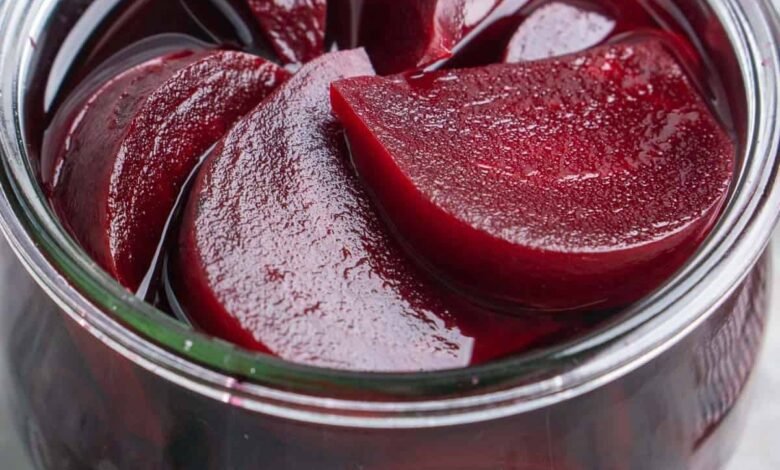
The homemade pickled beets recipe is a classic traditional food preservation method that transforms humble raw red root vegetables into bright ruby red preserved treasures filled with rich flavor and gentle sweetness. When you prepare this recipe in your own kitchen, you take fresh whole beets from your local farm stand or grocery store, gently simmer them in boiling water until tender, slip away their paper thin outer skins, slice them into uniform rounds or rustic wedges, and submerge them in a warm aromatic vinegar brine infused with fragrant spices and natural sweeteners. This time honored culinary process allows the natural earthy notes of the red roots to blend harmoniously with the sharp acidity of vinegar and the soothing warmth of aromatic spices like whole cloves and cinnamon. Cooking pickled beets from scratch gives home kitchen cooks complete authority over every ingredient, ensuring that no artificial preservatives, excess synthetic additives, or unwanted chemicals enter your family food jars. It is an extremely approachable recipe that requires no expensive machinery, specialized canning tools, or advanced chef techniques, making it the ideal weekend project for complete beginners who want to explore traditional preserving. The resulting crimson slices offer a delicate tender crunch and a striking vibrant visual appeal that instantly elevates any plate, turning everyday meals into visually captivating dining experiences. By preparing these preserves at home, you create a batch of delicious sliced beets that will stay fresh, crisp, and full of flavor in your refrigerator for many weeks or in your storage pantry for long periods. Every single jar represents a labor of love that honors traditional kitchen wisdom while providing a convenient, ready to eat vegetable side dish whenever you desire a quick burst of tangy goodness.
People all around the world fall deeply in love with homemade pickled beets because they offer an extraordinary flavor balance that commercial factory alternatives simply cannot replicate. The magical combination of deep earthy root notes, bright vinegar acidity, and subtle natural sweetness creates an unforgettable sensation on the tongue that brightens up almost any meal. Food lovers appreciate how the vivid ruby red color of the sliced beets creates a striking visual contrast when placed against fresh green salad leaves, soft white goat cheese, creamy spreads, and rich roasted meats. Families love this recipe because it is amazingly economical, taking inexpensive root vegetables that are easily available in every market and turning them into luxury preserves at a tiny fraction of store prices. Children and adults alike enjoy the unique sweet and tangy taste profile, which makes eating healthy root vegetables fun, engaging, and enjoyable even for picky eaters who usually avoid plain cooked vegetables. Home cooks adore how versatile these pickled slices are, as they can be enjoyed directly from the glass jar as a refreshing snack, tossed into fresh summer salads, layered inside turkey or beef sandwiches, or served alongside hearty Sunday roast dinners. The satisfying process of preparing a large batch brings immense personal joy, giving you a wonderful sense of self sufficiency and kitchen mastery when you see sparkling filled glass jars lined up neatly on your kitchen counter. Knowing that you created something so visually stunning and deeply delicious without artificial colors or chemical preservatives makes every bite feel immensely rewarding and nourishing for your loved ones.
There are many emotional and taste related reasons to prepare homemade pickled beets, especially during cozy weekend afternoons when you want to connect with slow cooking traditions. Cooking a fresh batch of preserved beets fills your entire home with a comforting warm aroma of simmering vinegar, sweet natural sugar, and rich earthy roots that evokes fond memories of family gatherings, grandmother kitchens, and rustic country feasts. Many people choose to make this recipe as a comforting seasonal ritual, celebrating autumn and winter harvests by storing nature bounty in sparkling glass jars to enjoy during colder months of the year. Preparing food from scratch acts as a peaceful form of kitchen therapy, allowing you to slow down, focus on simple tactile tasks like washing, slicing, and packing jars, and take a restful break from busy modern schedules. On a flavor level, you choose to make pickled beets whenever your daily meals feel plain or repetitive, because just a couple of ruby red slices can instantly awaken your taste buds and add excitement to neutral foods like boiled potatoes, steamed rice, grilled chicken, or roast pork. The irresistible contrast of sharp tartness and smooth sweetness acts as an effective palate cleanser during heavy meals, making rich food feel lighter, fresher, and far more enjoyable to consume. Sharing homemade jars with friends, neighbors, or family members during holiday visits brings genuine personal happiness, turning a simple jar of preserved root vegetables into a heartfelt gift that communicates warmth, care, and traditional hospitality.
From a health, fitness, and active lifestyle perspective, making homemade pickled beets is one of the smartest nutrition decisions you can make to feed your body essential natural compounds. Red beets are naturally packed with organic nitrates, which your body efficiently converts into nitric oxide to help relax blood vessels, enhance blood circulation, and maintain healthy blood pressure levels. Fitness enthusiasts and dedicated athletes frequently incorporate red beets into their pre workout routines because improved oxygen delivery through better blood flow can boost athletic performance, increase physical stamina, and reduce exercise fatigue. These vibrant root vegetables contain powerful unique antioxidants known as betalains, which give beets their deep reddish purple color while helping defend body cells against oxidative stress, supporting liver function, and promoting natural detoxification processes. Furthermore, beets are loaded with dietary fiber, folate, potassium, and essential manganese, all of which support smooth digestive health, heart function, and stable energy metabolism in daily life. The vinegar used in the pickling liquid brings its own set of wellness advantages, as acetic acid has been shown to assist with blood sugar stabilization after carbohydrate rich meals and support a healthy digestive environment. By controlling the exact amount of salt and sweetener in your homemade recipe, you can customize the preserves to align with your personal diet goals, avoiding high fructose corn syrup and excessive sodium commonly found in commercial canned goods. Consuming these nutrient dense pickled slices regularly allows you to enjoy a flavorful, low fat, guilt free treat that actively supports your overall physical fitness and daily vitality.
Ingredients You Will Need
Selecting high quality ingredients is the secret to creating outstanding homemade pickled beets with perfect texture and balanced flavor. Freshness matters greatly when pickling root vegetables, so select beets that feel firm, smooth, and heavy for their size without soft spots or deep cracks. Using pure water and standard pickling salt prevents liquid cloudiness, ensuring your finished jars look clear, bright, and professional. Below is the complete list of fresh ingredients and aromatic spices required to craft four pint jars of delicious preserved beets.
Fresh Produce & Liquid Base
Fresh Red Beets: 3 pounds of medium sized raw beets with firm skins and green tops trimmed to two inches. Medium beets cook more evenly than huge overgrown roots.
White Vinegar or Apple Cider Vinegar: 2 cups with 5 percent acidity. Apple cider vinegar provides a softer fruity sweetness, while white vinegar delivers a crisp clean bite.
Pure Filtered Water: 2 cups of clean water to dilute the vinegar strength and balance the pickling liquid.
Sweeteners, Salt & Spices
Granulated White Sugar: 1 cup of standard granulated sugar to balance the vinegar acidity. You can adjust this amount slightly depending on your personal taste preference.
Pickling Salt or Kosher Salt: 1 tablespoon of pure additive free salt. Avoid iodized table salt because non caking agents can make the pickling liquid look cloudy.
Whole Cloves: 1 teaspoon of whole dried cloves to infuse a warm spicy aroma into the brine.
Whole Allspice Berries: 1 teaspoon of whole allspice for deep complex herbal notes.
Cinnamon Stick: 1 small whole cinnamon stick broken into two pieces for sweet warming undertones.
Yellow Mustard Seeds: 1 teaspoon of whole mustard seeds for a mild pleasant savory accent.
| Ingredient Name | Exact Quantity | Measurement Unit | Purpose & Substitution Notes |
|---|---|---|---|
| Fresh Red Beets | 3.0 | Pounds | Main root vegetable; select firm medium roots |
| 5% Acidity Vinegar | 2.0 | Cups | Preservation base; use cider or white vinegar |
| Filtered Water | 2.0 | Cups | Dilutes acidity for pleasant drinkable brine |
| Granulated Sugar | 1.0 | Cup | Balances tartness; honey can be substituted |
| Pickling Salt | 1.0 | Tablespoon | Enhances flavor; use additive free pure salt |
| Whole Cloves | 1.0 | Teaspoon | Adds warm aromatic spice notes to liquid |
| Whole Allspice | 1.0 | Teaspoon | Provides rustic herbal complexity |
| Cinnamon Stick | 1.0 | Small Stick | Infuses gentle woody sweetness into jars |
Step by Step Method
Follow this detailed step by step process designed specifically for beginner cooks. Each phase is broken down into simple clear instructions to guide you through cleaning, boiling, peeling, slicing, and preserving your fresh beets with complete confidence.
Begin by placing your fresh raw beets in a clean sink under cold running water. Scrub them very gently with a soft vegetable brush to remove any lingering garden soil, taking care not to rupture or tear the outer skin. Leave the long taproot intact at the bottom and trim the green leafy tops, leaving approximately two inches of stem attached to the top of each beet. Leaving the root and stem intact during cooking is an important traditional culinary trick that prevents the beet vivid crimson juices and natural sugars from bleeding out into the boiling water, preserving their rich color and flavor.
Place the cleaned whole beets inside a large heavy stockpot and cover them completely with cold tap water, ensuring the water level sits at least two inches above the top of the beets. Place the pot on your stovetop over high heat and bring the water to a full rolling boil. Once boiling, reduce the heat to medium, cover the pot with a tight lid, and simmer gently for about 30 to 45 minutes depending on the size of your beets. Test for doneness by inserting a sharp fork into the center of a beet. The fork should slip in smoothly with gentle resistance, indicating the root is cooked but still firm.
While the beets finish simmering, prepare a large mixing bowl filled with cold water and ice cubes. As soon as the beets reach perfect fork tenderness, use a slotted spoon to carefully transfer them from the boiling pot into the prepared ice water bath. Allow them to submerge for two to three minutes until they are cool enough to handle comfortably with your bare hands. Take a cooled beet and use your thumbs to push gently against the skin. The outer skin will slip off effortlessly without needing a paring knife. Trim off the root end and stem top cleanly.
Place your peeled smooth beets on a clean cutting board. Using a sharp chef knife or a crinkle cutter blade, slice the beets into uniform rounds approximately one quarter inch thick. If you prefer rustic salad shapes, you can cut smaller beets into quarters or wedges instead of circular rounds. Keeping the slice thickness uniform ensures that every piece absorbs the pickling brine at the same rate, resulting in consistent texture and flavor across all your finished glass jars.
Step by Step Method (Continued)
In a medium non reactive stainless steel saucepan, combine the two cups of vinegar, two cups of filtered water, one cup of granulated sugar, and one tablespoon of pickling salt. Place the whole cloves, whole allspice berries, and cinnamon stick inside a small cheesecloth spice bag, or tie them loosely with kitchen string so they can be removed easily later. Place the saucepan over medium high heat and stir continuously until the sugar and salt dissolve completely into the liquid. Bring the pickling brine to a gentle boil, then turn down the heat and let it simmer softly for 5 to 10 minutes to allow the warm spices to infuse into the sweet vinegar solution.
Thoroughly wash four pint glass mason jars, metal lids, and screw bands in hot soapy water and rinse them clean. Keep the glass jars warm by placing them in a pot of hot water or inside a running dishwasher to prevent the glass from cracking when hot liquid is added later. Carefully pack your warm sliced beets snugly into the warm glass jars, stacking the rounds evenly to fill each jar while leaving half an inch of empty space at the top rim, which is known as headspace.
Remove the spice bag from your simmering pickling liquid. Using a clean liquid ladle and a canning funnel, carefully pour the hot pickling brine over the packed sliced beets in each jar. Ensure all beet slices are completely submerged under the liquid while maintaining half an inch of headspace at the top of the jar. Gently slide a clean wooden utensil or plastic bubble remover down along the inner sides of each jar to release any trapped air bubbles. Adjust liquid if necessary, wipe the glass rims with a clean damp towel, place the lids on top, and tighten the screw bands until fingertip tight.
You have two convenient options for finishing your pickled beets. For quick refrigerator storage, simply allow the filled glass jars to cool completely at room temperature for one hour, then place them directly into your refrigerator. Let them cure for at least 24 to 48 hours before eating so the pickling flavor penetrates deep into the beet slices. For long term shelf stable storage, process the sealed glass jars in a boiling water bath canner for 30 minutes, remove them onto a kitchen towel, and let them rest undisturbed for 24 hours until the lids click sealed.
Why This Recipe Is Special
This homemade pickled beets recipe stands out as a exceptional choice for both new kitchen cooks and experienced home preservers. Unlike industrial factory canned goods that often rely on artificial preservatives, high fructose corn syrup, and harsh processing, this traditional recipe celebrates clean whole food ingredients and customizable flavors. Here are the core highlights that make this specific recipe so special, delicious, and rewarding to prepare.
Beets are renowned globally for their dense concentration of dietary nitrates, essential minerals, and protective plant compounds. Eating homemade pickled beets provides your body with natural support for blood circulation, cardiovascular health, and physical stamina during daily workouts. The betalain antioxidants responsible for their rich crimson color help protect cells from environmental stress, while natural dietary fiber promotes smooth digestive regularity and long lasting satiety after meals.
The taste profile of this recipe achieves a delightful equilibrium between natural earthy root sweetness, bright vinegar acidity, and warm aromatic spice notes. Every single bite delivers a crisp yet tender bite that awakens the palate without overwhelming your mouth with harsh sourness. It is a harmonious taste profile designed to pair effortlessly with a vast variety of main courses, side dishes, and fresh salads.
By making your own preserves from scratch, you retain total control over what enters your food jars. You can easily adjust the amount of sugar, choose unrefined sweetener options, or cut back on salt to match your personal nutritional preferences. You get pure whole food quality without artificial dye powders, synthetic firming agents, or chemical stabilizers.
Buying gourmet pickled vegetables at specialty grocery stores can quickly become expensive. Fresh raw red beets are among the most affordable root vegetables available at local markets. Converting low cost fresh produce into high value luxury jars allows you to fill your refrigerator with nutritious ready to eat side dishes while saving money on your weekly grocery bill.
Extra Tips for Better Taste
Taking your homemade preserves from good to extraordinary requires just a few creative kitchen adjustments. Here are simple chef inspired tips and custom variation ideas that will help you enhance flavor, adjust texture, and discover exciting new ways to serve your pickled beets.
Creative Spice and Herb Infusions
Customize your pickling brine by adding extra aromatics to the saucepan. Try adding two peeled garlic cloves, half a thinly sliced red onion, or a pinch of dried red pepper flakes for a subtle savory kick. Fresh herbs like fresh dill sprigs or star anise pods also impart wonderful gourmet character into the preserving liquid.
Exploring Alternative Natural Sweeteners
If you wish to avoid refined white sugar, you can replace it with equal amounts of pure maple syrup, raw honey, or coconut palm sugar. Maple syrup introduces a rich earthy undertone that complements the natural deep flavor of red beets, while honey adds floral sweetness to the vinegar brine.
Vinegar Blending for Softer Acidity
Experiment with blending different high quality vinegars to refine the tanginess. A combination of three parts apple cider vinegar and one part red wine vinegar provides a fruity complexity that works beautifully with root vegetables. Always ensure that any vinegar blend you use maintains at least 5 percent acidity for proper preservation safety.
Patience in Flavor Curing
Although refrigerator pickled beets are technically ready to eat after 24 hours, their flavor improves significantly if you allow them to cure undisturbed in the cold refrigerator for 3 to 5 days. The additional time allows the sweet aromatic vinegar solution to penetrate deep into the center of each beet slice, resulting in richer taste throughout.
Serving and Culinary Pairing Suggestions
Serve your chilled pickled beets sliced over fresh spinach or arugula salads alongside crumbled goat cheese, toasted walnuts, and a light olive oil dressing. They also make an excellent topping for roasted turkey burgers, grain bowls, charcuterie boards, or served simply alongside roasted pork chops and mashed potatoes.
Final Thoughts
Making your own homemade pickled beets is a wonderful, fulfilling culinary project that brings rich traditional flavor, vibrant color, and wholesome nutrition directly into your daily meals. As a beginner, you will quickly realize how easy, fun, and satisfying it is to turn plain raw root vegetables into restaurant quality preserved treasures using simple kitchen tools and natural ingredients. Every sparkling glass jar you fill is a reflection of mindful home cooking that nourishes your body while delighting your taste buds. We hope this step by step guide inspires you to embrace the simple craft of home preserving, share healthy delicious food with your family, and enjoy every bite of these sweet and tangy ruby red slices for months to come.
Nutrition Details
Pickled beets are low in calories and fat while providing rich dietary fiber, essential vitamins, and valuable trace minerals. Below is the estimated nutritional breakdown for a standard half cup serving size as well as values calculated for the entire recipe batch.
| Nutrient Component | Amount Per Serving (1/2 Cup / 100g) | Percent Daily Value (% DV) | Total Recipe Batch (4 Pint Jars) |
|---|---|---|---|
| Total Calories | 65 kcal | 3 % | 1040 kcal |
| Total Fat | 0.1 g | 0 % | 1.6 g |
| Saturated Fat | 0.0 g | 0 % | 0.0 g |
| Sodium | 180 mg | 8 % | 2880 mg |
| Total Carbohydrates | 15 g | 5 % | 240 g |
| Dietary Fiber | 2.2 g | 9 % | 35.2 g |
| Total Sugars | 12 g | * | 192 g |
| Protein | 1.1 g | 2 % | 17.6 g |
| Folate (Vitamin B9) | 72 mcg | 18 % | 1152 mcg |
| Manganese | 0.28 mg | 14 % | 4.48 mg |
| Potassium | 220 mg | 6 % | 3520 mg |
Disclaimer
This article is provided for general informational, educational, and culinary enjoyment purposes only. Nutritional calculations are estimates based on standard ingredient databases and may vary depending on specific produce sizes, brand selections, or recipe modifications. Everyone’s body, digestive system, and nutritional requirements are different, and individual health responses to foods may change based on personal circumstances. If you have specific dietary restrictions, medical conditions, or health concerns regarding sodium intake, blood pressure management, or vinegar consumption, please consult with a qualified physician or registered dietitian before making significant changes to your regular diet.